Category Archive

Capital & Markets

Global macroeconomic shifts, hyperscaler AI capital expenditure cycles, power grid bottlenecks, and semiconductor unit economics.

The $1 Trillion Governance Shock: Nvidia After Jensen Huang, and the Real Test of Its Silicon Moat Semiconductor Governance
Capital & Markets

The $1 Trillion Governance Shock: Nvidia After Jensen Huang, and the Real Test of Its Silicon Moat

Jensen Huang's sudden November 2026 resignation erased over $1 trillion from Nvidia's peak valuation, forcing Wall Street to price the company without its founder premium. Separating the governance shock from the underlying machine reveals a stark dichotomy: while the Vera Rubin ramp and $108 billion quarterly revenue trajectory remain locked in, the loss of the 'Jensen Beat' exposes Nvidia's flat organizational structure just as custom hyperscaler ASICs and HBM cost inflation test its 75% gross margin fortress.

The $664 Billion Backlog Illusion: Oracle's $75.6B CapEx Reckoning and the Politics of Permissioned Megawatts Infrastructure Economics
Capital & Markets

The $664 Billion Backlog Illusion: Oracle's $75.6B CapEx Reckoning and the Politics of Permissioned Megawatts

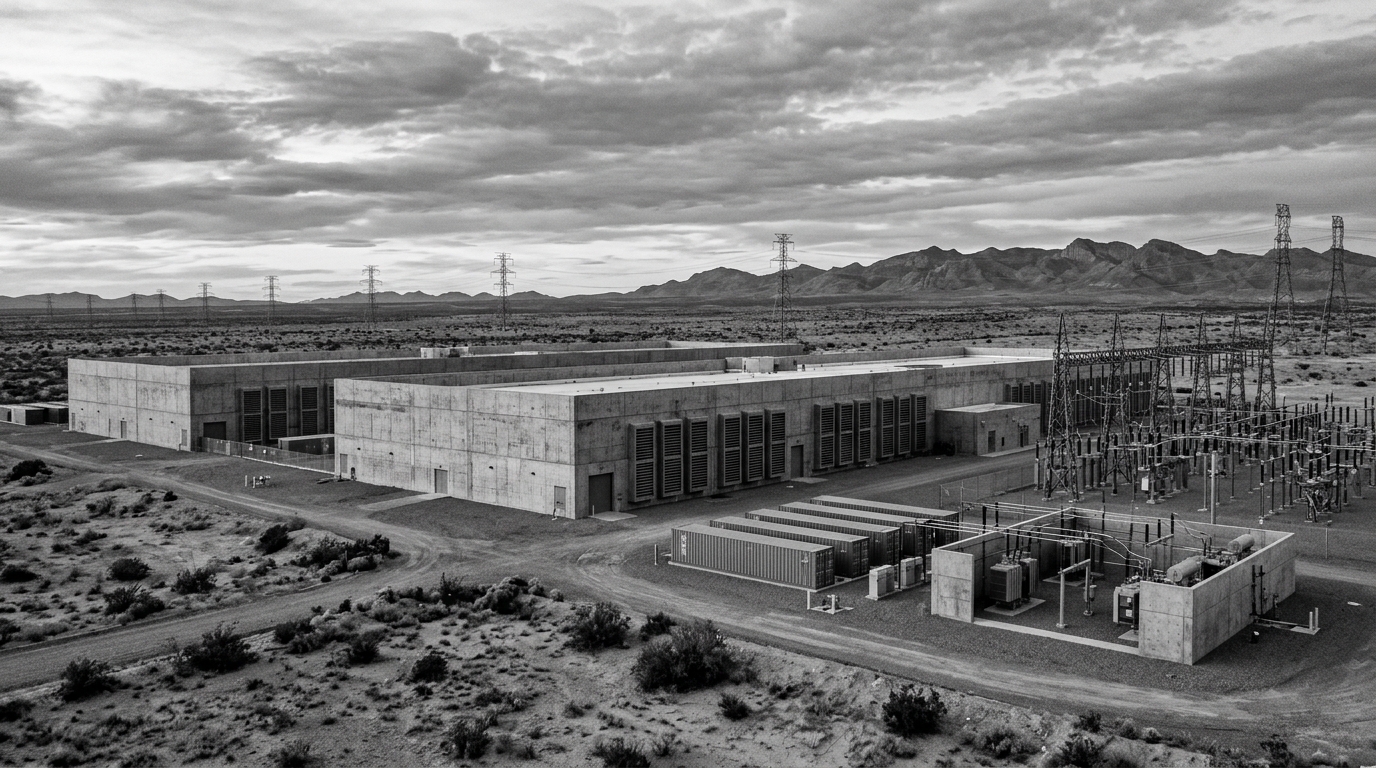
Oracle's $664.0 billion RPO backlog masks a brutal near-term cash drain: $75.60 billion in annualized CapEx against $54.00 billion in operating cash flow leaves free cash flow at -$21.60 billion annualized (-$5.40B/quarter). As Project Jupiter's 2.45 GW New Mexico microgrid confronts pipeline denials and a force majeure notice, the true AI bottleneck has shifted from silicon supply to state-level energy politics.

The Price-Performance Trap: Closed Model Token Deflation and the Private Cluster Margin Squeeze Infrastructure Economics
Capital & Markets

The Price-Performance Trap: Closed Model Token Deflation and the Private Cluster Margin Squeeze

Frontier closed API pricing has plunged 84% year-over-year to $0.40 per million blended tokens. With dedicated server clusters orchestrated via Kubernetes facing 70-kilowatt-per-rack density constraints and aggressive three-year economic write-downs, enterprise private infrastructure is sliding into negative economic spread.